
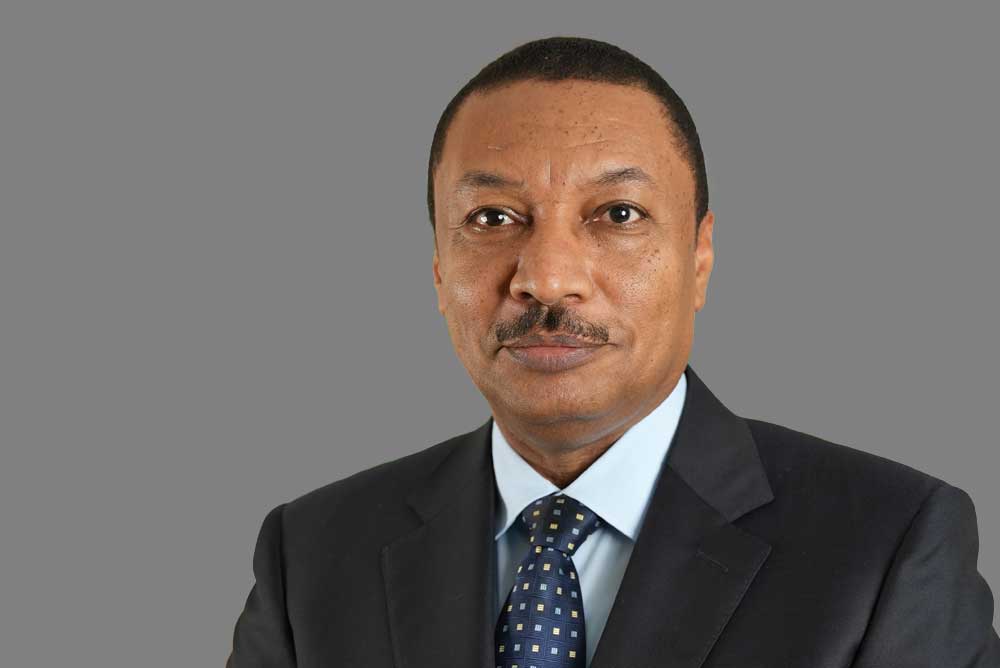
Read Full Magazine Here. In an era defined by economic volatility and shifting global trade dynamics, Dr. Khalid Khalafalla, Chief Executive Officer of the Islamic Corporation for the Insurance of Investment and Export Credit (ICIEC), is charting a forward-looking strategy to navigate uncertainty.
Since assuming leadership in December 2024, he has drawn on nearly two decades of experience within the Islamic Development Bank (IsDB) Group to strengthen economic resilience and unlock growth opportunities for member states through ICIEC’s Shariah-compliant trade and investment insurance solutions.
In February 2025, Dr. Khalafalla also took on the role of Officer-in-Charge and CEO of the Islamic Corporation for the Development of the Private Sector (ICD), simultaneously steering two pivotal institutions at the heart of Islamic finance. With a strong academic foundation—including a Ph.D. in Economics from the University of Bonn, an MBA from Henley Business School, and advanced studies in leadership and project finance—he combines vision with execution to deliver transformative impact.
Recently, BUSINESS LIFE reporter sat down with Dr. Khalafalla for an exclusive interview, where he shared his insights on leading through uncertainty, the future of Shariah-compliant finance, and his vision for empowering member states in an increasingly complex global economy.
1. ICIEC’s Strategic Mandate and Legacy of Impact
BL: As the insurance arm of the Islamic Development Bank Group, the Islamic Corporation for the Insurance of Investment and Export Credit (ICIEC) occupies a unique position among multilateral institutions, combining Shariah-compliant principles with global development objectives. Could you share how ICIEC’s mandate translates into tangible impact and highlight landmark achievements over the past three decades that have shaped trade, investment, and sustainable development across member states? And how do they contribute to advancing the UN Sustainable Development Goals (SDGs)?
Dr. Khalid Khalafalla: ICIEC, as the credit and political risk insurance arm of the IsDB Group, was established in 1994 with a mandate to promote cross-border trade and investment across its member states.
Over the past three decades, ICIEC has evolved from a pioneering concept into a cornerstone of inclusive development finance. As the only multilateral credit and investment insurer operating in conformity with Islamic finance principles, we occupy a unique position. This allows us to effectively support the least developed member countries and underserved markets, where conventional insurance often does not reach, thereby enabling trade and investment flows that would otherwise not materialize. In this sense, our mandate is not simply about insurance; it is about de-risking development and building resilience for our Member States.
The tangible impact of this mandate is clear. Since inception, ICIEC has facilitated over USD 121 billion in insured trade and investment (Trade: USD 96 billion; Investment: USD 25 billion), supporting strategic sectors including food security, energy, transport, and infrastructure. Our coverage has enabled, for instance, political risk insurance for large-scale renewable energy plants in North Africa, credit enhancement for agricultural imports in Least Developed Member States during global supply shocks, and de-risking for critical infrastructure in post-conflict economies. These interventions show how risk mitigation can translate directly into economic resilience, market access, and development impact.
Over the years, ICIEC’s operations have also been carefully aligned with the UN SDGs. Today, our work contributes directly to at least 8 SDGs. These include SDG 2 (Zero Hunger), SDG 3 (Good Health and Well-being), SDG 7 (Affordable and Clean Energy), SDG 8 (Decent Work and Economic Growth), SDG 9 (Industry, Innovation, and Infrastructure), SDG 10 (Reduced Inequalities), SDG 13 (Climate Action), and SDG 17 (Partnerships for the Goals).
Since our establishment, ICIEC has supported 318 projects that directly contributed to specific SDGs:
-USD 6.6 billion investments supported in Least Developed Member States (LDMSs). USD 1.8 billion in trade and investment in the agricultural sector.
-USD 3.1 billion in trade and investment in the health sector.
-10 healthcare projects supported.
USD 52.2 billion in trade and investment related to the energy sector.
-USD 17.7 billion in imports, exports, outward and inward investment in LDMSs.
-USD 3.2 billion in labor-intensive industries
-USD 7.2 billion in trade and investment related to infrastructure.
-USD 131 million support for high-tech businesses.
-6,700 kilometers of roads and railways constructed or rehabilitated.
-USD 12.1 billion in trade and investment related to green projects.
-35 clean energy projects producing 1990 megawatts of renewable energy.
-USD 56.4 billion trade insurance mobilized from partners.
-USD 56.6 billion in Intra-OIC trade and investment supported
-153 strategic partnerships with national ECAs, reinsurers, banks, and other multilateral institutions.
Most importantly, ICIEC has consistently stood by its Member States in moments of crisis, such as ensuring the continuity of essential imports during the COVID-19 pandemic when we contributed to the IsDB Group Food Security Response Programs.
2. Adapting ICIEC’s Mandate to Emerging Global Priorities
BL: The global development landscape is evolving rapidly, with shifting economic dynamics, technological advances, and new geopolitical realities. How is ICIEC adapting its strategic priorities and operational model to remain relevant, effective, and responsive to the changing needs of its member states?
Dr. Khalid Khalafalla: The global development landscape is undergoing rapid transformation, driven by shifting economic dynamics, technological disruption, and evolving geopolitical realities. For ICIEC, this means adapting its strategy to remain not only relevant but also a proactive partner for its Member States, who increasingly demand stronger risk-mitigation tools, private capital mobilization, and innovative solutions for sustainable growth.
Anchored in the IsDB Group’s Strategic Realignment, ICIEC ensures coherence with Group priorities while channeling its products toward food security, climate transition, and private-sector–led growth. This alignment is reinforced through regular strategic reviews and feedback loops with Member States, ensuring that ICIEC’s offerings are continuously refined to match evolving national priorities
ICIEC’s physical regional presence further strengthens its ability to respond swiftly to Member States’ requests and support them in mobilizing financing by working with investors, banks, and partners to shape appropriate solutions. This localized engagement model allows ICIEC to match private capital flows with on-the-ground needs, reducing response time and enhancing project impact.
To sustain this responsiveness, ICIEC has expanded reinsurance partnerships and strengthened capital through the General Capital Increase, enabling larger transactions and dynamic portfolio adjustments. At the same time, it continues to drive innovation by developing new products, embedding sustainability considerations into underwriting, and leveraging digitalization to enhance operational efficiency and client experience.
A key element of its evolving model is the catalytic role it plays in blended finance, using ICIEC risk-mitigation tools to crowd in private capital alongside concessional resources from MDBs and DFIs. This helps to unlock investment for high-impact projects in renewable energy, infrastructure, and healthcare, to name but a few.
3. Credit Strength & Global Standing
BL: ICIEC has consistently maintained the highest credit ratings among its peers. What does the recent reaffirmation of ICIEC’s AA- rating by S&P signify for its financial strength, operational resilience, and ability to deliver on its development mandate?
Dr. Khalid Khalafalla: The reaffirmation of ICIEC’s 'AA-' rating by S&P, alongside its 'Aa3' rating by Moody’s underscores the Corporation’s robust financial strength, operational resilience, and strategic importance, even under challenging global conditions. This dual endorsement from two of the world’s top rating agencies signals to investors, partners, and member states that ICIEC is a low-risk, high-reliability counterparty, providing confidence for long-term cooperation and large-scale transactions.
ICIEC’s solid capital base, strong liquidity, prudent risk management, and consistent underwriting performance supported by conservative reserving and robust reinsurance—ensure a high level of loss-absorbing capacity and sustained solvency across scenarios. In 2024, for instance, ICIEC achieved a record technical surplus, including business insured of USD 13 billion, demonstrating both scale and measurable impact across diverse member states.
With significant exposure growth, ICIEC has consistently maintained AAA level capital adequacy and liquidity, benefiting from extremely low claims history, reinforcing market confidence in its creditworthiness and insurance financial strength. This reflects the strong foundation and conservative risk management framework established over the past few years.
ICIEC’s financial flexibility is further enhanced by continued shareholder support and its ability to mobilize private capital from low-risk international reinsurance markets. This external capital is particularly critical for member states, where demand for coverage is high but internal capacity remains limited, enabling ICIEC to expand capacity and effectively offload risk.
Shareholder commitment is evidenced by the ongoing implementation of the 3rd General Capital Increase (GCI) and by operational synergies with the AAA rated Islamic Development Bank. These factors reinforce ICIEC’s strategic mandate and position it as a leading Shariah-compliant provider of credit and political risk insurance (CPRI) in emerging and frontier markets.
The reaffirmed ratings reflect global confidence in ICIEC’s ability to withstand shocks, draw on shareholder support when needed, and deliver on its developmental mandate. The reaffirmation also strengthens trust among international partners and financial institutions, enabling risk-based limits on ICIEC, capital relief under Basel regulations, and market expansion—further cementing ICIEC’s reputation as a resilient, impactful, and strategically relevant CPRI provider.
4. Strategic Response to Food Security Challenges
BL: Food security has emerged as one of the most pressing challenges for many ICIEC member states, exacerbated by supply chain disruptions, geopolitical instability, and climate impacts. How is ICIEC leveraging its risk mitigation tools and partnerships to enhance food security, strengthen agricultural value chains, and ensure sustainable trade in essential commodities?
Dr. Khalid Khalafalla: Food security has emerged as a critical concern across many ICIEC member states, exacerbated by global supply chain disruptions, geopolitical instability, climate change, and inflationary pressures. In response, ICIEC has positioned itself as a key enabler of food security financing and investment by leveraging its risk mitigation tools, strategic partnerships, and integration within the IsDB Group’s broader framework. Since the launch of the IsDB Group Food Security Response Program (FSRP) in July 2022 through December 2024, ICIEC approved food-related transactions totaling USD 1.12 billion. These transactions have facilitated the import of essential food commodities, fertilizers, and agricultural equipment, as well as strategic investments in the agribusiness sector. Moreover, ICIEC works closely with governments, MDBs, DFIs, and private sector partners to structure de-risked, bankable projects that strengthen agricultural value chains from production to distribution.
ICIEC is progressively evolving into a central actor in enhancing food security among OIC member states by channeling Islamic insurance tools to de-risk Agri-trade and investment, supporting resilient, climate-smart agriculture systems, collaborating across multilateral, public, and private stakeholders, and aligning interventions with long-term SDG targets to ensure sustainable trade in essential commodities. As food insecurity continues to intensify globally, ICIEC’s holistic risk-sharing approach is critical to enabling inclusive growth and long-term resilience across the Islamic world.
5. Innovation in Shariah-Compliant Solutions
BL: ICIEC is recognized as a global leader in Shariah-compliant investment and export credit insurance. What innovations or new instruments are you developing to meet the evolving needs of governments, exporters, and investors?
Dr. Khalid Khalafalla: ICIEC stands at the forefront of innovation within the domain of Shariah-compliant investment and export credit insurance. As a global leader, ICIEC consistently anticipates and responds to the evolving requirements of governments, exporters, and investors across its member states. The organization’s product development strategy is characterized by an integrative and iterative approach, meticulously aligning with the dynamic needs of key stakeholders, including financial institutions, corporates, and investors.
Recently, ICIEC has introduced a suite of innovative products designed to address nuanced challenges within member states. One such addition is the insurance of fair and unfair calling of bonds, a solution tailored for corporates undertaking Engineering, Procurement, and Construction (EPC) contracts within ICIEC member states. This instrument offers essential risk mitigation to corporates, fostering greater participation in strategic infrastructure projects and supporting economic diversification agendas.
Another notable innovation is the introduction of a trade finance solution specifically for the insurance of avalized drafts. This product is purpose-built for financial institutions operating in the trade finance arena and is particularly impactful in facilitating export and import transactions within member states. By providing coverage for avalized drafts, ICIEC bolsters the confidence of counterparties, enabling smoother cross-border trade flows and enhancing liquidity within the real economy.
In response to member countries’ aspirations to access international capital markets—whether rated or unrated, ICIEC has developed a dedicated Sukuk insurance policy. This offering wraps Sukuk issuances with the robust backing of ICIEC’s Aa3/AA- ratings, thereby enabling member countries to secure improved pricing and longer tenor profiles. The Sukuk insurance policy is a testament to ICIEC’s commitment to supporting Islamic capital market development, fostering financial inclusion, and catalyzing sustainable development through Shariah-compliant means.
Furthermore, ICIEC is forging impactful partnerships with regional development banks operating within its member states. Through the “credit enhancement solution” of the non-honoring of financial obligations by regional development banks, ICIEC empowers these institutions to access international bank facilities on preferential terms. The resultant funding can then be deployed for long-term, strategic projects within member states, effectively boosting the capacity of regional development banks and fostering deeper collaboration between multilaterals for shared developmental objectives.
The rigorous oversight provided by the IsDB Group Shariah Board guarantees that all products adhere to the highest standards of Shariah compliance, ensuring that innovation is always anchored in ethical principles.
6. Expanding Strategic Partnerships
BL: Partnerships are critical for scaling impact. How is ICIEC leveraging collaborations with MDBs, DFIs, and private sector actors to mobilize resources and drive sustainable trade and investment, both within and beyond its member states?
Dr. Khalid Khalafalla: ICIEC recognizes that partnerships are critical to scaling impact and is actively leveraging collaborations with MDBs, DFIs, ECAs, and private sector actors to mobilize resources and drive sustainable trade and investment across and beyond its member states. This collaborative approach is not only about pooling resources but also about aligning strategic priorities and policy frameworks to ensure long-term sustainability and measurable development outcomes.
Through initiatives such as the Africa Co-Guarantee Platform with AfDB, ATIDI, Afreximbank, and GuarantCo, ICIEC pools risk capacity to unlock infrastructure, health, and energy projects in Africa, while the Arab-Africa Trade Bridges (AATB) program serves as a corridor for South-South trade and food security, including a USD1.5 billion dedicated program. In the field of climate and energy transition, ICIEC partners with IRENA’s ETAF to channel green finance into member country pipelines.
Bilateral agreements with MDBs and DFIs such as AfDB, TDB, and Afreximbank enable ICIEC to scale its non-honoring and PRI instruments. This is exemplified by the EUR 250 million insured fund raising for TDB and the joint effort with AfDB to expand partial credit guarantees for ESG-linked projects in Côte d’Ivoire. ICIEC has also developed a dedicated instrument to cover MDB fundraising activities and supports MDBs in strengthening their equity base by insuring callable capital. These instruments not only expand financial reach but also build investor confidence, accelerating the pace at which transformative projects can reach financial close.
Strategic MoUs with (among others) NEXI Japan, Credendo Belgium, and Saudi EXIM further extend co-insurance, blended finance, and re-takaful solutions beyond ICIEC’s capital base, while cooperation with national DFIs such as NEXIM Nigeria reinforces export-led growth channels. Such arrangements are complemented by joint technical assistance programs, knowledge sharing, and market development initiatives, ensuring that capacity-building accompanies financial solutions. These alliances are translating into tangible results, including over USD 700 million in new agreements at the 2025 IsDB Group Meetings.
Private sector mobilization remains at the core of ICIEC’s mandate. By de-risking transactions in its member states, ICIEC helps unlock financing from private banks and investors who would otherwise be reluctant to participate in such deals in markets perceived, rightly or wrongly, to be high risk. This includes structuring public–private partnership (PPP) risk-sharing models that enable governments to attract private sector capital into strategic sectors such as renewable energy, logistics, and agribusiness. By sharing risk, reducing the cost of capital, and broadening geographic reach, ICIEC’s collaborative model ensures that its credit and political risk insurance instruments remain catalytic in advancing food security, climate action, and sustainable trade and investment within and beyond its member states.
7. Catalyzing Climate-Smart Growth and Green Investment
BL: With the global transition toward low-carbon economies gaining momentum, what opportunities do you see for ICIEC member states in climate-smart investment, and how is the Corporation positioning itself to help capture these opportunities?
Dr. Khalid Khalafalla: The IsDB Group Strategy 2026–2030 has set clear priorities to accelerate the green transition and scale up climate-related projects across Member States. As the Group’s credit and investment risk insurer, ICIEC plays a catalytic role by de-risking green investments, mobilizing private capital, and innovating in green finance solutions.
ICIEC is fully committed to supporting Member States in achieving their Nationally Determined Contributions (NDCs) under the Paris Agreement. To this end, ICIEC identifies bankable climate-smart opportunities in renewable energy, energy efficiency, sustainable agriculture, water management, and climate-resilient infrastructure, aligning them with each Member State’s national development agenda.
The Corporation has actively engaged with Member States—particularly during the COP conferences—to originate climate projects and establish strategic partnerships with key stakeholders in the climate finance ecosystem. These partnerships extend to MDBs, DFIs, climate funds, and private investors to unlock blended finance structures that make green projects commercially viable.
Importantly, ICIEC has already built a solid track record in supporting flagship green projects, including the Benban Solar Park in Egypt, the Sharjah Waste-to-Energy Plant in the UAE, the off-grid solar street lighting initiative in Senegal, and many others. Beyond energy, ICIEC has provided insurance for water and sanitation projects as well as climate-resilient infrastructure across several Member States. These transactions not only reduce emissions and enhance resilience but also create green jobs, strengthen local supply chains, and attract foreign investment.
In 2024, ICIEC recorded USD 13 billion in total business insured, of which 13% was allocated to climate-related initiatives—a share the Corporation is determined to increase in the coming years.
At the operational level, ICIEC launched its Climate Change Policy during COP28 in Dubai (2023), complemented by a robust ESG Framework to embed sustainability considerations across all aspects of its activities—from risk assessment and underwriting to product innovation such as Green Sukuk Insurance.
Looking ahead, ICIEC is determined to scale up its climate impact by channeling more resources toward sustainable, low-carbon, and resilient projects across its Member States. By combining its unique risk-mitigation mandate with innovative green finance solutions and strong partnerships, ICIEC will continue to act as a trusted catalyst for moblising capital to position its Member States at the forefront of the global green economy, turning climate challenges into investment-driven growth opportunities.
8. Driving MDB Priority Agendas: Blended Finance, Capital Mobilization & Debt Sustainability
BL: The global development community is focusing on blended finance, private capital mobilization, and debt sustainability as critical tools to bridge financing gaps. How is ICIEC contributing to these efforts while ensuring that solutions remain Shariah-compliant and impactful for member states?
Dr. Khalid Khalafalla: In alignment with the broader developmental priorities of the global community, ICIEC is proactively advancing the agendas of blended finance, private capital mobilization, and debt sustainability—three critical pillars required to bridge the increasingly pronounced financing gaps faced by developing economies.
ICIEC calibrates pricing to prevailing risks and market conditions while offering competitive terms that help mobilize investments for our member countries. When ICIEC’s risk cover is combined with a multilateral development bank (MDB) instruments in a blended-finance structure, the overall (blended) cost of financing can be reduced and access improved. ICIEC also emphasizes the importance of tenor extension, which plays a pivotal role in enhancing the sustainability of member countries’ debt service by spreading obligations over an extended period.
Through its comprehensive derisking tools, ICIEC unlocks capital that might otherwise be diverted to less challenging markets. By mitigating a wide spectrum of risks, ICIEC attracts capital to member countries, notably from not only traditional banking channels but also institutional investors. The ICIEC “wrap” has garnered positive recognition, fostering the participation of institutional investors who have, in turn, invested in member country projects through mechanisms such as repacked notes. This process expands the funding pool, particularly for long-term financing, thereby addressing key developmental needs.
ICIEC’s capital mobilization efforts are multifaceted, characterized by both interpolar flows (from the global North to the South) and intrapolar flows (within the OIC member states, facilitating the movement of capital from regions such as MENA to Sub-Saharan Africa and Asia). This embodies the core principles of South-South cooperation, harnessing resources from within the OIC member states to strengthen solidarity and shared prosperity.
The impact of ICIEC’s initiatives is evidenced by a marked increase in the uptake of derisking solutions by banks and other financial institutions, directly catalyzing the funding of critical development projects and strategic transactions across member countries. In all these endeavors, ICIEC remains committed to upholding Shariah principles, ensuring that every instrument and intervention is not only impactful but also aligned with ethical frameworks.
In conclusion, ICIEC’s ongoing innovation in Shariah-compliant solutions and its leadership in blending finance, capital mobilization, and debt sustainability reflect the Corporation’s unwavering commitment to driving impactful development, fostering resilience, and empowering member countries to achieve inclusive and sustainable growth.
9. Leading Two Institutions for Greater Development Impact
BL: As the head of both ICIEC and the Islamic Corporation for the Development of the Private Sector (ICD), you are uniquely positioned to influence trade, investment, and private sector development across the IsDB Group. How do you leverage the synergies between these two institutions to deliver greater impact for member states, and what strategic priorities will guide your leadership in the years ahead?
Dr. Khalid Khalafalla: I see tremendous opportunities to leverage ICIEC and ICD complementary strengths for the benefit of our member states. ICIEC plays a critical role in mitigating risk, enabling cross-border trade, and mobilizing investment flows, while ICD focuses on financing and developing the private sector. By aligning these two mandates, we can create an integrated platform where risk mitigation catalyzes investment, and investment in turn drives sustainable private sector growth.
This synergy allows us to design end-to-end solutions—from feasibility and structuring to financing, risk cover, and post-investment support—that significantly reduce barriers for investors and entrepreneurs.
Looking ahead, my strategic priorities will focus on three areas:First, deepening collaboration across the IsDB Group to deliver holistic solutions that combine finance, risk cover, and advisory services. Second, scaling private sector development in high-impact sectors such as renewable energy, agribusiness, and SMEs, which are essential for job creation and resilience. Third, leveraging innovation and partnerships to attract private capital, while ensuring our interventions are aligned with the SDGs and the evolving needs of our member states. Additionally, we will focus on fostering cross-learning between ICIEC and ICD teams, enabling joint product innovation and knowledge-sharing that can be rapidly adapted to different markets.
By leveraging these synergies, I believe we can multiply our collective impact—facilitating greater trade, unlocking new investments, and empowering the private sector to become the engine of inclusive and sustainable growth. Our ultimate goal is to create a unified development approach that maximizes value for member states, accelerates SDG progress, and enhances the IsDB Group’s global competitiveness, while continuing to build on the distinct strengths of each institution.